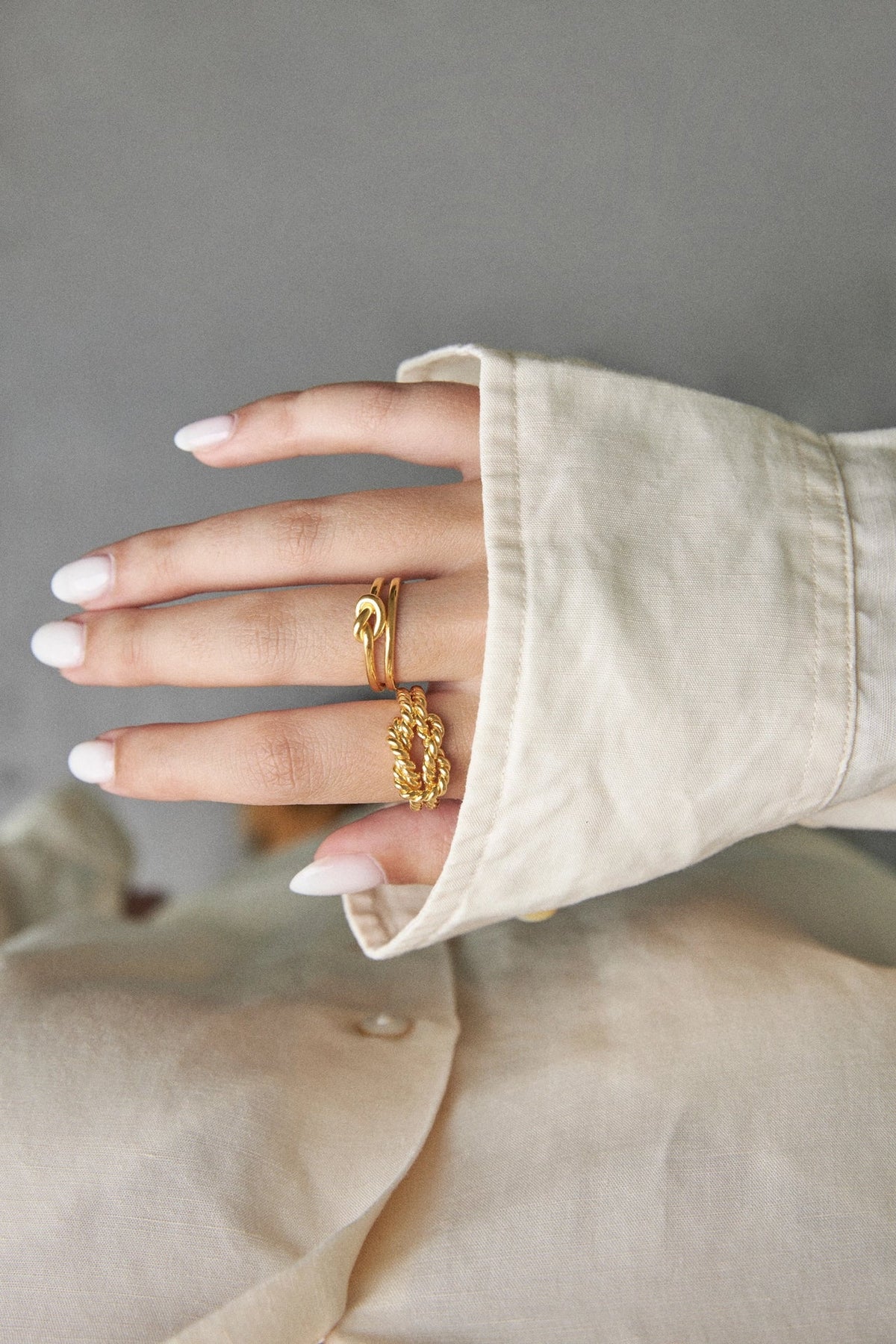
There are choices that seem small until they become part of every day. Deciding between a plain or textured wedding band is one of them: it changes how the piece catches the light, how it combines with other rings and, above all, how it feels on the hand over the years.

A wedding band does not have to follow a formula. It can be discreet, but never indifferent. It can have a perfectly polished surface or a finish with relief, organic marks or small details that give it character. The best choice is the one that reflects your story and your style without requiring any effort to wear repeatedly.
Plain or textured wedding band: the difference is in the detail
A plain wedding band is a classic for a reason. The uniform, usually polished surface creates a clean and elegant reflection. It is a safe choice for those who value minimalist lines, like versatile jewellery and are looking for a piece that outlasts trends without losing its presence.
A textured wedding band introduces dimension. The finish may be hammered, satin, brushed, fluted or more organic, with a subtle texture created by hand. Instead of reflecting light continuously, it creates points of brightness and shadow. The result is more expressive, even in a thin and lightweight band.
It is not a question of choosing between a simple option and a bold one. A plain wedding band can have an almost architectural strength. A textured one can remain delicate and timeless. The difference lies in the visual language you prefer to wear every day.
When to choose a plain wedding band
If your style tends towards minimalism, a plain wedding band will probably be the most natural choice. It looks good on its own, complements an engagement ring without competing with it and adapts to silver, gold or a combination of metals. It is the kind of jewellery that makes sense with a white shirt, a formal dress or a knitted jumper at the weekend.
A mirror polish is especially luminous and has a refined presence. For those who prefer a softer, yet still uniform finish, satin offers a contemporary alternative. It remains smooth to the touch, although with a more restrained shine.
A plain wedding band is also an excellent choice for engraving a date, initials or a short phrase. The simplicity of the exterior leaves room for the meaning to be kept inside. A detail that belongs only to you.
There is, however, a practical consideration. Polished surfaces tend to reveal small scratches more easily, especially on a piece worn every day. This does not diminish their beauty: they are signs of life, of holding hands, travel, work and routine. Still, if you prefer a finish that disguises these natural marks better, a texture may work in your favour.
The right choice for a ring stack
A plain wedding band is particularly easy to combine. If you already wear an engagement ring with diamonds, a central stone or a detailed setting, the plain band creates balance. It does not take attention away from the other piece and allows the stack to look considered rather than excessive.
It also works for those who like to change their rings. It can be worn alongside a thin ring in another metal, a piece with a pearl or a more sculptural design. It is a reliable foundation for building a collection, one piece at a time.
The appeal of a textured wedding band
A textured wedding band is for those who notice the finish. Up close, it reveals workmanship, material and intention. From a distance, it maintains a discreet elegance, but with a less predictable light than a polished surface.
The hammered finish is one of the most sought-after for this reason. Each small facet reacts differently to the light, giving the band an almost liquid movement. It is a choice with personality, while still being easy to wear every day.
A brushed or satin texture, on the other hand, has a more pared-back attitude. The shine is soft, modern and less conventional than a mirror polish. For those who prefer jewellery with a quiet yet distinctive presence, it may be the ideal balance.
Organic textures, in turn, appeal to those looking for a less rigid and more personal piece. No perfectly regular surface, no overly produced effect. There is something special about a wedding band that seems made to be touched, worn and lived in.
Does a texture require more care?
It depends on the finish. A fine texture can accumulate residue from products such as hand cream, soap or makeup, so it is advisable to clean it regularly with warm water, mild soap and a soft cloth. A very soft brush can help reach raised areas without putting pressure on the surface.
On the other hand, many textured finishes disguise superficial scratches better than a highly polished wedding band. Daily wear can subtly alter the definition of the texture over time, especially in very delicate reliefs. This is part of the nature of a piece of jewellery worn repeatedly, but it is worth considering if you are looking for an appearance that remains exactly the same for many years.
The quality of the metal and the craftsmanship remains essential. A well-designed piece, with carefully considered proportions and finish, ages more beautifully. At CINCO, the idea is simple: jewellery in 925 silver and 18ct gold to live with you, not to remain stored away.
Comfort, width and routine: what influences the decision
The surface is not the only element that defines the right wedding band. The width, thickness and inner profile make a real difference, especially when the piece will be on your finger every day.
A thin, plain wedding band is usually lightweight, almost imperceptible, and works very well on hands that prefer delicate jewellery. A wider version creates impact and a more assertive presence. If you choose a texture, the width can help make it more visible: on a very narrow band, some finishes naturally appear more subtle.
The inner profile also deserves attention. A slightly rounded interior offers a more comfortable feel, especially if you are not used to wearing rings. If you work extensively with your hands, play sport or do not like taking jewellery off often, look for a design without harsh edges and with a texture that does not easily catch on fabrics.
It is useful to try the wedding band alongside the rings you already wear. A textured band can create a beautiful contrast with a polished solitaire, while two highly detailed surfaces can make the set visually more intense. There is no fixed rule. There is only proportion, comfort and what makes you look at your hand and think: this is really it.
Should you choose matching wedding bands?
Not necessarily. Sharing a commitment does not mean having to wear the same finish. You can choose the same width in different metals, the same metal with different textures or even two designs connected only by an interior engraving.
For some couples, matching wedding bands represent a shared aesthetic and a classic gesture. For others, different pieces make more sense because they respect the way each person dresses and lives. Both choices are valid when there is an intentional connection between them.
A balanced solution is to keep one element in common: 925 silver or 18ct gold, a similar profile, an engraving with the same date or a complementary finish. That way, each wedding band has its own identity, but both belong to the same story.
How to make the final decision
Think first about use, not just the photograph. If the wedding band will accompany everything from meetings to holidays and weekends, it should feel just as right on an ordinary day as it does on a special occasion. Jewellery for life has to work in real life.
Choose a plain wedding band if you are looking for maximum versatility, classic shine and a base that is easy to combine. Opt for a texture if you want the piece to reveal more material, movement and a less predictable signature. And, if you are undecided, let the feeling on your finger make the decision. The right choice is not the most obvious one. It is the one that continues to feel like yours after you wear it every day.
As joias douradas combinam com prata? Sim, e ficam bem.